

Lactose malabsorption diagnosis is a common digestive condition linked to the body’s reduced ability to break down lactose, the natural sugar found in milk and dairy products. This process depends on lactase, an enzyme produced in the small intestine that helps digest lactose properly. When lactase activity is insufficient, lactose may remain undigested and reach the colon, where it can be fermented by bacteria and trigger digestive symptoms.
Understanding how lactose malabsorption is diagnosed is essential. Symptoms alone can suggest lactose intolerance, but they do not always confirm the underlying cause. A precise diagnosis can help patients avoid unnecessary dietary restrictions, identify the right management strategy, and distinguish lactose intolerance from other digestive disorders or milk-related conditions.
What is lactose malabsorption?
Lactose malabsorption vs. lactose intolerance
Lactose malabsorption and lactose intolerance are closely related, but they are not exactly the same. Lactose malabsorption refers to the poor digestion or absorption of lactose. Lactose intolerance refers to the symptoms that may appear after consuming lactose-containing foods or drinks.
In other words, a person may have lactose malabsorption without always experiencing noticeable symptoms. Symptoms depend on several factors, including the amount of lactose consumed, remaining lactase activity, gut microbiota, intestinal sensitivity, and individual tolerance.
The role of lactase deficiency
Lactase deficiency is one of the main biological reasons behind lactose malabsorption. The LCT gene provides instructions for producing lactase, the enzyme needed to digest lactose. When lactase production decreases, lactose digestion becomes less efficient.
In many people, lactase activity naturally declines after childhood. This is known as lactase non-persistence. However, some populations retain lactase activity into adulthood, a trait known as lactase persistence.
Genetics and lactase persistence
Genetics plays an important role in adult lactose digestion. Variants linked to lactase persistence or non-persistence influence whether lactase production remains active after weaning. This is why lactose tolerance can vary widely between individuals and populations.
For this reason, genetic testing can be useful in specific contexts, especially when the goal is to identify a predisposition to primary lactase deficiency.
How is lactose malabsorption diagnosis?
Several diagnostic methods are available to investigate lactose digestion. Each test explores a different aspect of the process and presents specific advantages and limitations.
Hydrogen breath test
The lactose HBT measures the excretion of hydrogen in expiratory air after oral challenge with a standard dose of lactose (50 g). As hydrogen is not produced by mammalian enzymes, its presence indicates contact of the sugar with bacteria indicating LM, although small intestinal bacterial overgrowth cannot be excluded.
Lactose tolerance test
The lactose tolerance test measures glucose in plasma at different times (e.g. 0, 30, 60, 120 min) after ingestion of 50 g lactose. Although the test does not require complex or expensive equipment, its invasive nature (multiple blood samples) limits its utility.
Genetic testing for lactase deficiency
Genetic tests apply real-time PCR or sequencing on DNA extracted from a venous blod or buccal swab sample. In Caucasians, LP is nearly uniformly mediated by the LCT-13910:C/T polymorphism, and genetic testing can detect genetic LN.
Intestinal lactase activity testing
Tests for lactase enzymatic activities on intestinal biopsies will detect primary and secondary LM. While an endoscopy with sedation is not indicated for this purpose, this test can be performed if endoscopy is indicated for other reasons. It should be noted that lactase activity is patchy and more than a single biopsy may be required for optimal test accuracy.
Gaxilose test
The gaxilose test involves the administration of the lactase substrate gaxilose (4-galactosylxylose) with measurement of D-xylose in urine or blood.
Why accurate lactose malabsorption diagnosis matters
Avoiding unnecessary dairy restriction
Accurate lactose malabsorption diagnosis helps avoid unnecessary complete dairy avoidance. Many people with lactase non-persistence can still tolerate some lactose, especially in smaller amounts or when consumed with meals. Some fermented dairy products, such as yogurt or certain cheeses, may also be better tolerated because they naturally contain less lactose.
This matters because dairy products can contribute important nutrients, including calcium, protein, magnesium, and vitamins.
Distinguishing lactose intolerance from other conditions
Digestive symptoms such as bloating, abdominal pain, gas, and diarrhea can be caused by several conditions, not only lactose intolerance. They may also overlap with irritable bowel syndrome, small intestinal bacterial overgrowth, inflammatory digestive disorders, or food allergies.
This is why lactose malabsorption diagnosis should not rely only on self-assessment when symptoms are persistent, severe, unusual, or associated with warning signs.
Supporting better nutrition and quality of life
Lactose intolerance can negatively affect quality of life. Fear of symptoms after eating dairy products may lead to food avoidance, anxiety around meals, and unnecessary nutritional restrictions.
A confirmed lactose malabsorption diagnosis allows patients and healthcare professionals to build a more personalized strategy: reducing lactose intake when needed, choosing lactose-free alternatives, using lactase supplements, or identifying tolerated dairy options.
Complications of lactose intolerance
Impact on quality of life and nutrition
Like other functional GI disorders, LI is not a trivial condition but has a negative impact on quality of life and nutrition. Anxiety increases the risk of symptoms (‘intolerance’) after lactose ingestion, but the fear that food will trigger bloating, pain and diarrhoea is also a cause of anxiety. The relationship between lactose tolerance and height has been demonstrated, although some of this effect could be explained by population stratification.
Daily milk consumption of 245 ml is associated with increased body height (0.39cm, 95%CI: 0.29 to 0.48). Similarly, milk intake and LP have been linked with higher body mass index (BMI) in some studies. Vitamin D levels were 2.3-fold (OR: 1.6–3.4) lower in individuals with LCT-13910:CC and 1.5-fold lower in LCT-13910:CT compared with LCT-13910:TT.
Vitamin D is important for bone mineralisation and a separate meta-analysis showed a higher bone mineral density and a lower risk of fractures for TT versus CT/CC (OR: 0.81, 95% CI: 0.7 to 0.94, p=0.005).
Treatment and practical solutions
Dietary management and therapy
Management of primary lactose intolerance consists of two possible clinical choice: alimentary restriction and drug therapy. The usual behavior for this condition is the avoidance of milk and dairy products from the diet. However, as previously mentioned, dairy foods provide calcium, protein, magnesium, and other minerals and substances that are essential for preventing various diseases and ensuring different physiological functions, such as bone remodelling.
The avoidance of all dairy products in patients with lactose intolerance is no longer recommended. Most people with lactose intolerance can tolerate up to 12–15 g of lactose per day.
Eralydix solution: a new approach to lactose malabsorption diagnosis
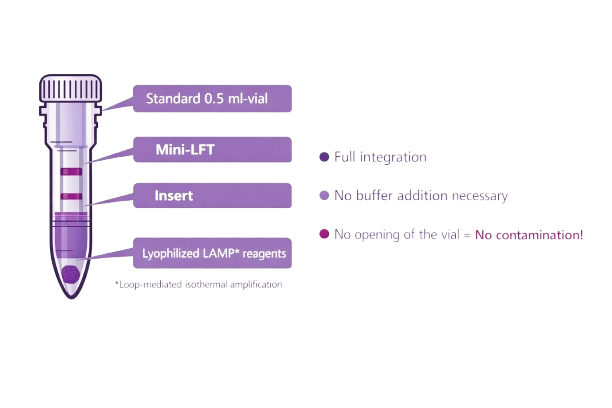
A new generation of lateral flow assay combined with LAMP
Here we propose a new generation of Lateral flow assay (LFA) combined with an isothermal DNA amplification (LAMP). Because a lactase non-persistence is associated with no copy of the T allele (-13910 C/T). The developed LAMP assay amplify the presence of the T allele (T/T or C/T).
A positive test will indicate that the patient is able to digest lactose (presence of at least one T allele) and a negative result indicate the inability of digesting lactose, characterized by the presence of only C allele (C/C). As current LAMP test performed on this polymorphism are interpreted by melting curve analysis, requiring highly skilled staff and well-equipped laboratory, we have developed a quick interpretation tool based on lateral flow assay.
This all-in-one system will allow easy and quick home testing or point of care (POC) testing, with performance comparable to lab analysis in less than 30 minutes.
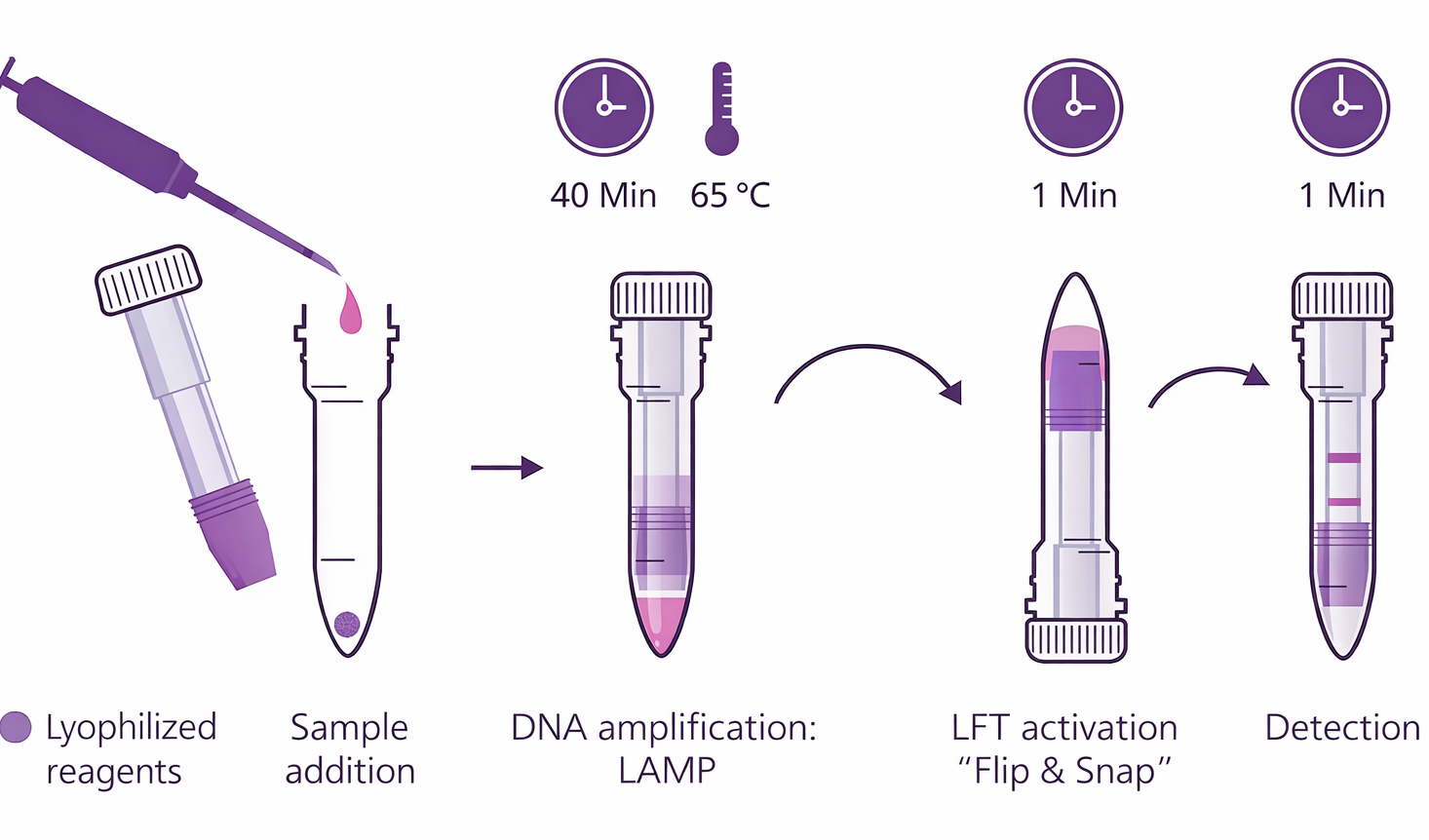
Rapid genetic detection from buccal swab or blood finger prick
Rapid test combining a (I) quick DNA isolation using our developed extraction buffer, (II) LAMP amplification of DNA and (III) a detection of amplified DNA with a LFA. The detection of lactose intolerance is based on the detection of the genetic polymorphism C/T-13910 variants and especially the presence of the T allele (specific for a lactase persistence) from a buccal swab sample or whole blood finger prick.
What tests are available for lactose malabsorption diagnosis?
Five tests of lactose digestion are available: genetic testing, intestinal lactase activity testing, hydrogen breath test, lactose tolerance test, and the gaxilose test. Each test investigates a different aspect of lactose digestion and has specific advantages and disadvantages.
What does the hydrogen breath test measure?
The lactose hydrogen breath test measures the excretion of hydrogen in expiratory air after oral challenge with a standard dose of lactose. The presence of hydrogen may indicate contact between lactose and bacteria, suggesting lactose malabsorption.
Can genetic testing detect lactase non-persistence?
Yes. Genetic testing can detect genetic lactase non-persistence by identifying variants such as the LCT-13910:C/T polymorphism. In Caucasians, lactase persistence is nearly uniformly mediated by this polymorphism.
What is the role of the C/T-13910 polymorphism?
How does the Eralydix solution support lactose intolerance testing?
Should people with lactose intolerance avoid all dairy products?
No. The avoidance of all dairy products in patients with lactose intolerance is no longer recommended. Most people with lactose intolerance can tolerate up to 12–15 g of lactose per day.