
Lactase deficiency revealed
Advancing lactase deficiency through rapid lateral flow assay and Portable LAMP testing
Eralydix develops an innovative a rapid lateral flow assay and Portable LAMP testing technology designed to detect lactase deficiency by identifying its genetic cause.
By combining advanced DNA analysis with a simplified testing process, our solution enables more precise diagnosis and supports better medical decision-making.
Developed in collaboration with Fraunhofer IZI, one of Europe’s leading applied-research institutes.
The scientific foundation of lactase deficiency
Lactose intolerance is primarily caused by a reduction in lactase enzyme activity, often linked to genetic variations.
Understanding these biological mechanisms is essential for advancing lactase deficiency and improving patient care.
Eralydix focuses on detecting these genetic variations directly, providing a reliable and science-based diagnostic approach.

A new approach to lactase deficiency
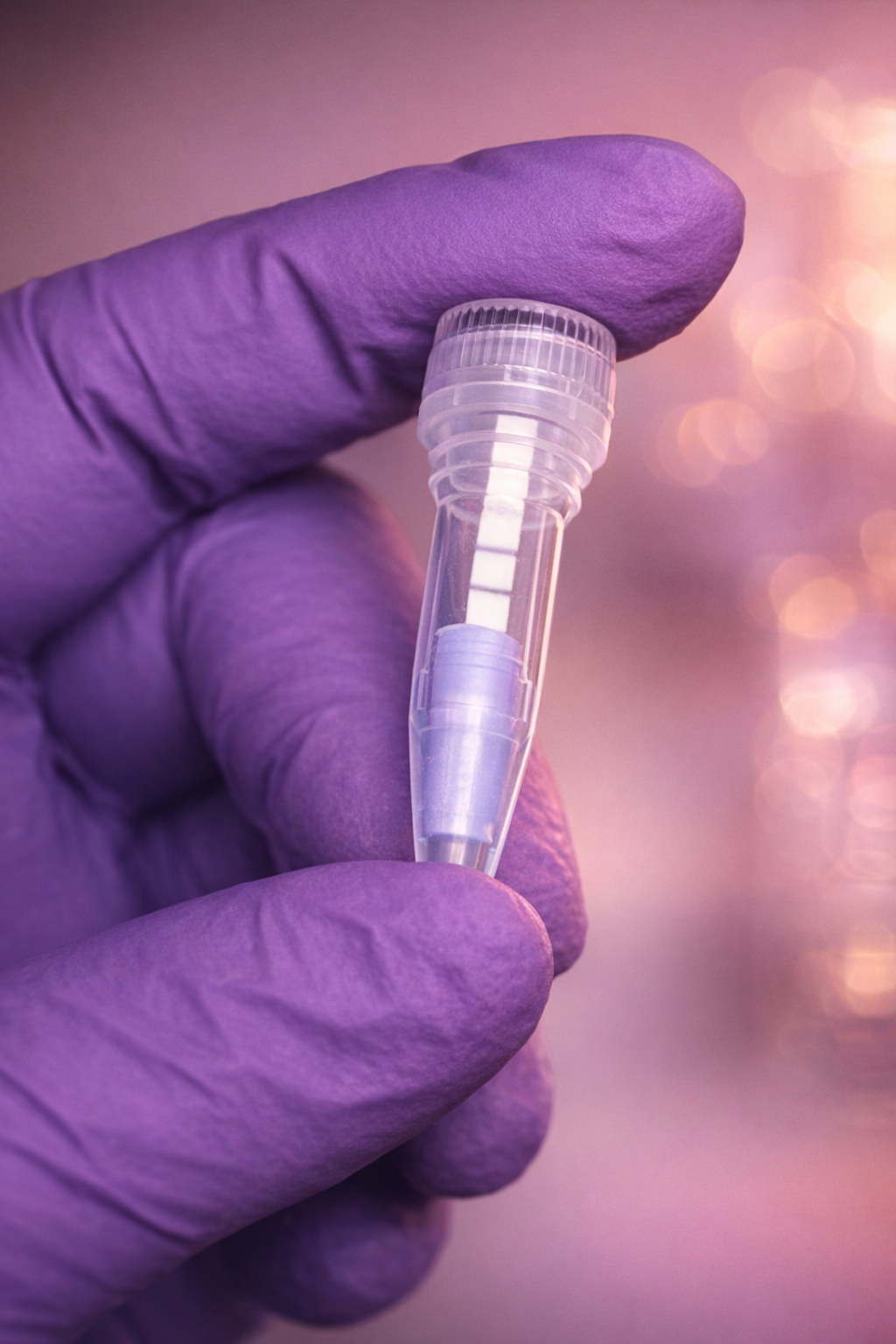
Our core innovation lies in targeting the genetic causes of lactose intolerance rather than relying on indirect diagnostic methods.
This allows for a more precise identification of the pathology related to lactase deficiency and promotes a more personalized approach.
🎯 Precision
⚡ Speed
🧬 Genetic insight
How our technology works
Our assay detects specific genetic markers associated with lactase deficiency through a streamlined DNA analysis process.
This enables accurate diagnosis without invasive procedures and provides reliable data to guide lactase deficiency strategies.
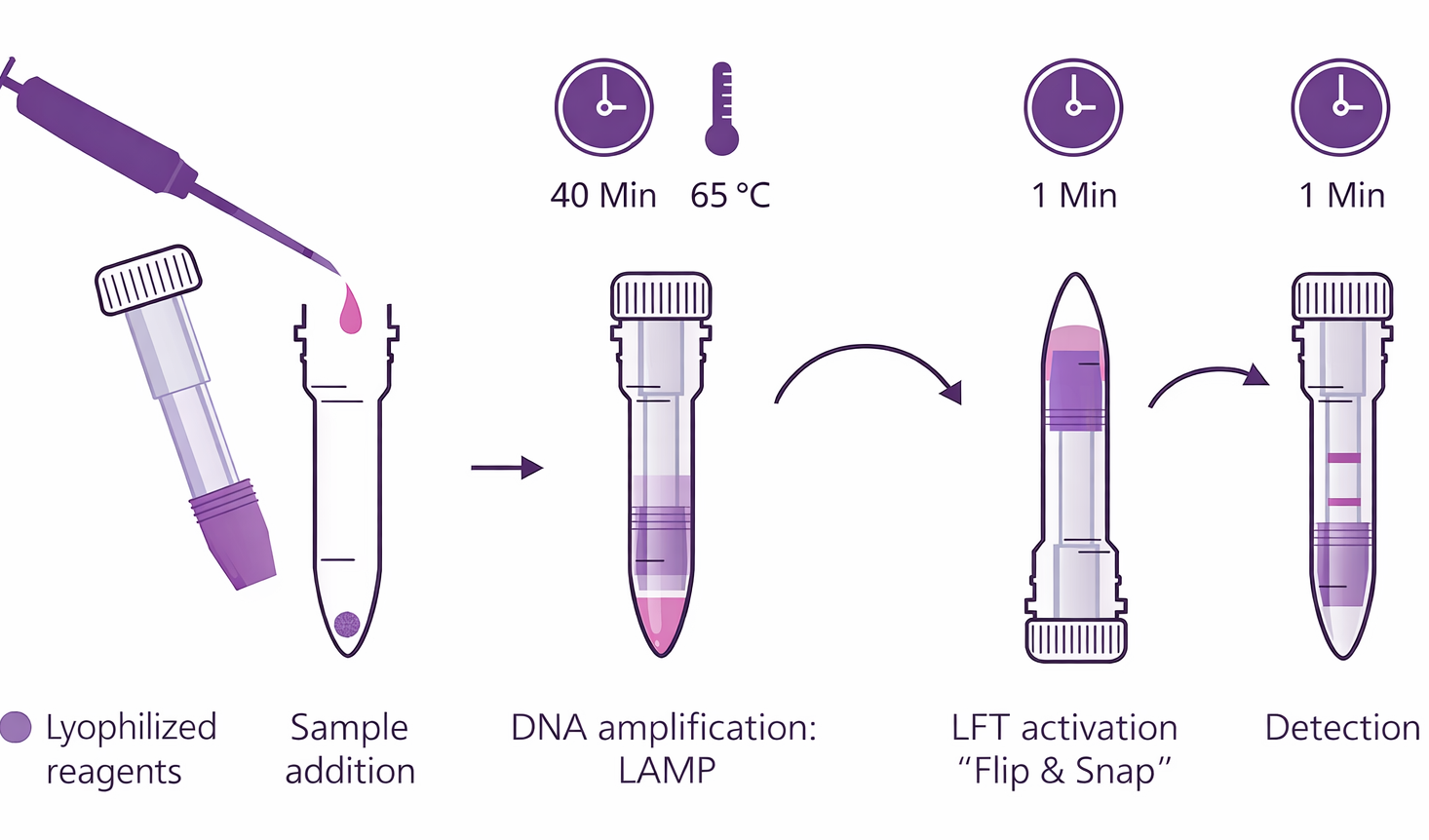
🧫 LAMP Amplification
Isothermal Loop-Mediated Amplification for rapid DNA processing targeting the C/T-13910 and G/A-22018 variants
🧬 LFA Visual Detection
Uses Lateral Flow Assay Technology to provide clear and easy-to-read screening results
📊 Platform by LactoTube
A closed integrated system that minimizes contamination and streamlines the testing workflow
Technical advantages of our product
Our solution has been designed to overcome the limitations of traditional diagnostic methods by making a rapid lateral flow assay and portable LAMP testing more accessible, efficient and scalable.
By reducing infrastructure requirements and simplifying workflows, Eralydix enables broader adoption across healthcare systems while opening new opportunities in both developed and emerging markets.
⚡ Fast and reliable results
🏥 Potential for large-scale deployment
✔️ Simple and efficient workflow
🔬 Robust and scientifically grounded approach
The genetics of lactase non-persistence
Lactase is encoded by the LCT gene on chromosome 2q21. Whether it stays active into adulthood is not decided by LCT itself, but by regulatory variants in the neighbouring MCM6 gene, which act as switches controlling LCT expression.
These are genetic variants — not separate genes.
LCT – the lactase gene
Encodes the lactase enzyme that digests lactose in the
small intestine.
MCM6 – the regulatory switch
Sits just upstream of LCT. Variants in its introns control whether lactase expression is maintained.
Key variants associated with lactase persistence
The ancestral allele corresponds to non-persistence; the allele shown maintains lactase activity.
| Variant | rs ID | Persistence allele | Main population |
|---|---|---|---|
| −13910 C>T | rs4988235 | T | Europe (reference marker) |
| −22018 G>A | rs182549 | A | Europe (linked to −13910) |
| −13907 C>G | rs41525747 | G | Horn of Africa, Middle East |
| −13915 T>G | rs41380347 | G | Arabian Peninsula, Middle East |
| −14010 G>C | rs145946881 | C | East Africa (pastoralist groups) |
Good to know: a genotype indicates a predisposition — lactase persistence or non-persistence — not the presence of symptoms. This is the difference between lactose malabsorption (the biological fact) and lactose intolerance (the symptoms).
A better alternative to traditional diagnostic methods
Current diagnostic approaches include breath tests and empirical dietary trials, which can be unreliable or uncomfortable.
Eralydix differentiates itself by:
targeting the genetic origin of lactose intolerance
providing more accurate and consistent results
enabling personalized management
| Hydrogen H2 Breath test | Lactose tolerance test | Eralydix LAMP LactoCheck | Duodenal Lactase activity | Serum or urine gaxilose/galactose test | Genetic test | |
|---|---|---|---|---|---|---|
| Lactose challenge | YES | YES | NO | NO | YES | NO |
| Assessment of Symptoms | YES | YES | NO | YES | NO | NO |
| Test Principle | Detection of H2 in expired air (exhaled breath) after lactose challenge | Increase in plasma glucose after lactose challenge | Detection of 13910(C/T) polymorphism in Portable/Home Rapid Test | Lactose enzymatic activity in duodenal biopsy | Detection of D-xylose or Galactose (blood or urine) after lactose challenge | Detection of 13910(C/T) polymorphism in Laboratory PCR testing |
| Cost | ++ | + | + | ++++ | +++ | +++ |
| Skilled staff & Equipment | +++ | ++ | + | ++++ | ++ | +++ |
| Limitations | False negative tests by H2 non producers; False positive test in rapid transit or altered bowel anatomy | Glucose disorders and altered bowel anatomy | False negative in presence of atypical mutations | Patchy expression of lactase; should not be performed as a first-line procedure | Variable test performance in the literature. False positive in various conditions such as rapid transit and others | False negative in presence of atypical mutations |
| Invasive & side effect | Minimally invasive but strong and side effects | Minimally invasive (blood sampling) but strong and side effects | Non-invasive (buccal swab) no side effect | Highly invasive and potential side effect due to sedation or anaesthesia | Minimally invasive (blood sampling) High side effects | Minimally invasive (depend on sampling) no side effect |
| Sensitivity (literature avg) | 77–88% | 75–94% | >90% (target – not yet validated) | 95–100% | 70–90% | 90–100% |
| Specificity (literature avg) | 85–98% | 77–96% | >90% (target – not yet validated) | 95–100% | 80–95% | 95–100% |
| Cost estimation in CH | CHF 400.- incl med. visit | CHF 250.- incl med. visit | CHF 50-100.- | CHF 2'000.- | Only research purpose | CHF 400.- incl med. visit |
Positioning in next-generation lactase deficiency
Eralydix positions itself as a key player in the discovery of lactase deficiency by integrating genetic knowledge into diagnostic processes.
Our technology bridges the gap between scientific research and practical clinical application, enabling more accurate and personalized care.
Let’s explore the genetic identification of lactase deficiency.
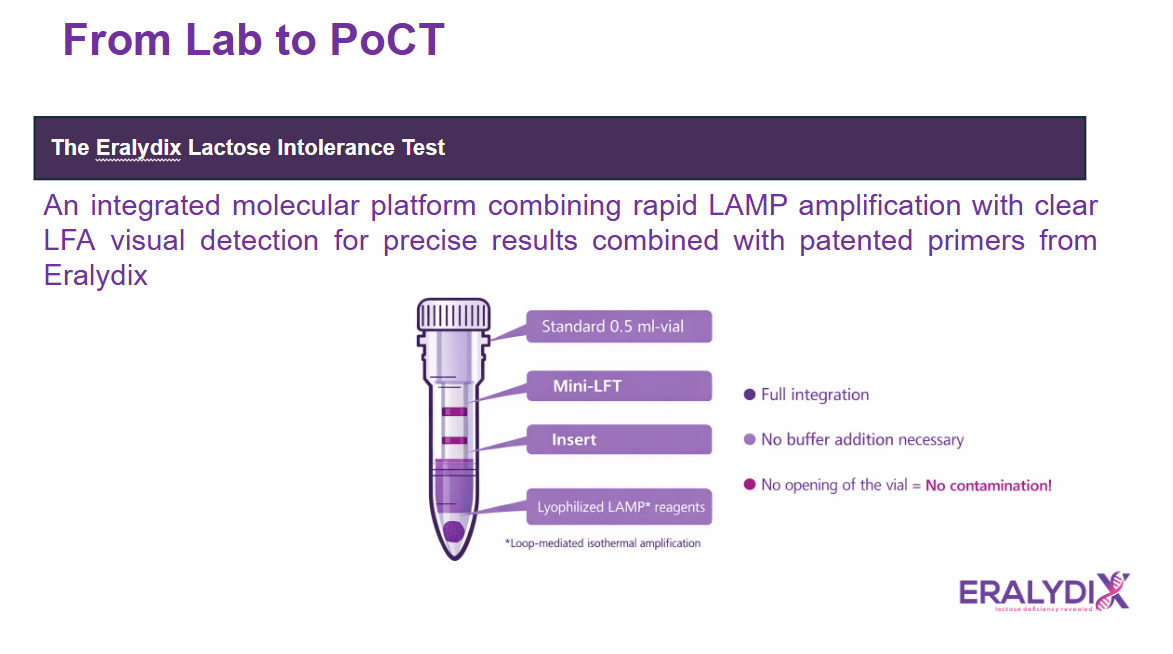
Our Eralydix’s technology FAQ
🧬 How does Eralydix’s technology work?
Eralydix’s technology analyzes genetic markers associated with lactase deficiency to provide clear and actionable diagnostic insights. The process is designed to be simple, fast and reliable.
🧪 What makes this technology innovative?
Our technology removes the need for complex lab infrastructure and enables faster, more accessible a rapid lateral flow assay and LAMP testing. It represents a significant advancement in biotech innovation applied to diagnostic medicine.
⚡ Is this technology scalable?
Yes, Eralydix’s technology is designed to be scalable across different healthcare environments, from laboratories to point-of-care settings, making it adaptable to global markets.
🩺 What are the main advantages of this technology?
The main advantages include speed, accessibility, cost-efficiency and the ability to deliver precise genetic insights, making it a strong alternative to traditional diagnostic methods.